
Jeep Wrangler 2018-2026 Owners Manual / STARTING AND OPERATING / STARTING THE ENGINE — DIESEL ENGINE (IF EQUIPPED)
Jeep Wrangler: STARTING AND OPERATING / STARTING THE ENGINE — DIESEL ENGINE (IF EQUIPPED)
Before starting your vehicle, adjust your seat, both inside and outside mirrors, and fasten your seat belts.
The starter is allowed to crank for up to 30-second intervals. Waiting a few minutes between such intervals will protect the starter from overheating.
WARNING!
- Before exiting a vehicle, always come to a complete stop, then shift the automatic transmission into PARK and apply the parking brake.
- Always make sure the wireless ignition node is in the OFF mode, key fob is removed from the vehicle and vehicle is locked.
- Never leave children alone in a vehicle, or with access to an unlocked vehicle. Leaving children in a vehicle unattended is dangerous for a number of reasons. A child or others could be seriously or fatally injured. Children should be warned not to touch the parking brake, brake pedal or the gear selector.
- Do not leave the key fob in or near the vehicle, or in a location accessible to children, and do not leave the ignition of a vehicle equipped with Keyless Enter-N-Go in the ACC or ON/RUN mode. A child could operate power windows, other controls, or move the vehicle.
- Do not leave children or animals inside parked vehicles in hot weather. Interior heat build-up may cause serious injury or death.
NOTE:
Engine start up in very low ambient temperature could result in evident white smoke. This condition will disappear as the engine warms up.
CAUTION!
- The engine is allowed to crank as long as 30 seconds. If the engine fails to start during this period, please wait at least two minutes for the starter to cool before repeating start procedure.
- If the “Water in Fuel Indicator Light” remains on, DO NOT START engine before you drain the water from the fuel filters to avoid engine damage.
 After Starting
T..

Other information:
Jeep Wrangler 2018-2026 Owners Manual: Plastic And Coated Parts
Use Mopar® Total Clean to clean vinyl upholstery. CAUTION! Direct contact of air fresheners, insect repellents, suntan lotions, or hand sanitizers to the plastic, painted, or decorated surfaces of the interior may cause permanent damage. Wipe away immediately...
Jeep Wrangler 2018-2026 Owners Manual: SiriusXM Guardian™ Contact Information And Business Hours
SiriusXM Guardian™/Care US residents visit: https://www.driveuconnect. com/sirius-xm-guardian.html or call 1-844-796-4827 Canadian residents visit: https://www.driveuconnect. ca/en/sirius-xm-guardian or call 1-877-324-9091 Uconnect Phone Customer Support UconnectPhone...
Categories
- Manuals Home
- Jeep Wrangler Owners Manual
- Jeep Wrangler Service Manual
- Jack Location
- Manual Seat Height Adjustment
- SOS Call System Limitations
- New on site
- Most important about car
To Unlock From The Driver or Passenger Side
With a valid Passive Entry key fob within 5 ft (1.5 m) of the door handle, grab the handle to unlock the vehicle. Grabbing the driver’s door handle will unlock the driver door automatically. Grabbing the passenger door handle will unlock all doors and the swing gate automatically.
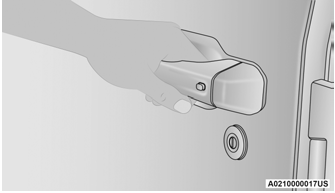
Grab The Door Handle To Unlock

Copyright © 2026 www.jewrangler.com