
Jeep Wrangler 2018-2026 Owners Manual / SAFETY / OCCUPANT RESTRAINT SYSTEMS / Seat Belt Systems / Lap/Shoulder Belt Operating Instructions
Jeep Wrangler: Seat Belt Systems / Lap/Shoulder Belt Operating Instructions
- Enter the vehicle and close the door. Sit back and adjust the seat.
- The seat belt latch plate is above the back
of the front seat, and next to your arm in the
rear seat (for vehicles equipped with a rear
seat). Grab the latch plate and pull out the
seat belt. Slide the latch plate up the
webbing as far as necessary to allow the
seat belt to go around your lap.

Pulling Out The Latch Plate
- When the seat belt is long enough to fit,
insert the latch plate into the buckle until
you hear a “click.”

Inserting Latch Plate Into Buckle
- Position the lap belt so that it is snug and
lies low across your hips, below your
abdomen. To remove slack in the lap belt
portion, pull up on the shoulder belt. To
loosen the lap belt if it is too tight, tilt the
latch plate and pull on the lap belt. A snug
seat belt reduces the risk of sliding under
the seat belt in a collision.

Positioning The Lap Belt
- Position the shoulder belt across the shoulder and chest with minimal, if any slack so that it is comfortable and not resting on your neck. The retractor will withdraw any slack in the shoulder belt.
- To release the seat belt, push the red button on the buckle. The seat belt will automatically retract to its stowed position. If necessary, slide the latch plate down the webbing to allow the seat belt to retract fully.
 Enhanced Seat Belt Use Reminder System (BeltAlert)
Driver And Passenger BeltAlert — If Equipped
BeltAlert is a feature intended
to remind the
driver and outboard front seat passenger (if
equipped with outboard front passenger seat
BeltAlert) to buckle their seat belts...
 Lap/Shoulder Belt Untwisting Procedure
Use the following procedure to untwist a twisted
lap/shoulder belt.
Position the latch plate as close as
possible to the anchor point.
At about 6 to 12 inches (15 to 30 cm) above
the latch plate, grab and twist the seat belt
webbing 180 degrees to create a fold that
begins immediately above the latch plate...
Other information:
Jeep Wrangler 2018-2026 Owners Manual: Anti-Lock Brake System (ABS)
The ABS provides increased vehicle stability and brake performance under most braking conditions. The system automatically prevents wheel lock, and enhances vehicle control during braking. The ABS performs a self-check cycle to ensure that the ABS is working properly each time the vehicle is started and driven...
Jeep Wrangler 2018-2026 Owners Manual: Hill Start Assist (HSA)
The HSA system is designed to mitigate roll back from a complete stop while on an incline. If the driver releases the brake while stopped on an incline, HSA will continue to hold the brake pressure for a short period. If the driver does not apply the throttle before this time expires, the system will release brake pressure and the vehicle will roll down the hill as normal...
Categories
- Manuals Home
- Jeep Wrangler Owners Manual
- Jeep Wrangler Service Manual
- The ASSIST and SOS Call Buttons On Your Rearview Mirror Or Overhead Console
- 2.0L Engine and 3.6L Engine
- SOS Call System Limitations
- New on site
- Most important about car
To Unlock From The Driver or Passenger Side
With a valid Passive Entry key fob within 5 ft (1.5 m) of the door handle, grab the handle to unlock the vehicle. Grabbing the driver’s door handle will unlock the driver door automatically. Grabbing the passenger door handle will unlock all doors and the swing gate automatically.
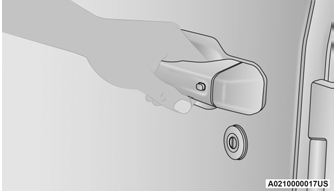
Grab The Door Handle To Unlock

Copyright © 2026 www.jewrangler.com