
Jeep Wrangler: STARTING AND OPERATING / STOP/START SYSTEM — MANUAL TRANSMISSION (IF EQUIPPED)
The Engine Stop/Start (ESS) function is developed to reduce fuel consumption. The system will stop the engine automatically during a vehicle stop if the required conditions are met. Pressing the clutch pedal will automatically restart the vehicle.
ESS vehicles have been upgraded with a heavy duty starter, enhanced battery, and other upgraded engine parts, to handle the additional engine starts. Vehicles equipped with eTorque contain a heavy duty motor generator and an additional hybrid electric battery to store energy from vehicle deceleration for use on engine startup after a stop as well as providing launch torque assist.
NOTE:
It is recommended that Stop/Start be disabled during off-road use.
Secondary Battery
Your vehicle may be equipped with a secondary battery used to power the Stop/Start system and the 12 Volt vehicle electrical system. The secondary battery is located behind the wheel well for the front passenger wheel.
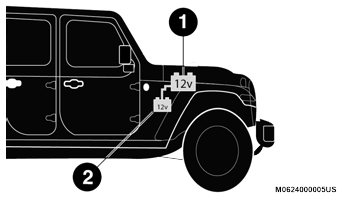
Battery Locations
- Primary Battery
- Secondary Battery
- Autostop Mode
- Possible Reasons The Engine Does Not Autostop
- To Start The Engine While In Autostop Mode
- To Manually Turn Off The Stop/Start System
- To Manually Turn On The Stop/Start System
- System Malfunction
 System Malfunction
If there is a malfunction in the Stop/Start
system, the system will not shut down the
engine. A “SERVICE STOP/START SYSTEM”
message will appear in the instrument cluster
display...
 Autostop Mode
WARNING!
Vehicles with the Stop/Start system will be
equipped with two batteries. Both the main
and the supplemental batteries must be
disconnected to completely de-energize the
12 Volt electrical system...
Other information:
Jeep Wrangler 2018-2026 Owners Manual: ENGINE START/STOP Button Functions — With Driver’s Foot OFF The Brake Pedal (In PARK Or NEUTRAL Position)
The ENGINE START/STOP button operates similar to an ignition switch. It has three modes: OFF, ACC, and RUN. To change the ignition modes without starting the vehicle and use the accessories, follow these steps: Start with the ignition in the OFF mode...
Jeep Wrangler 2018-2026 Owners Manual: Phone Operation
Operation Voice commands can be used to operate the Uconnect Phone and to navigate its menu structure. Voice commands are required after most Uconnect Phone prompts. There are two general methods for how Voice Command works: Say compound commands like “Call John Smith mobile”...
Categories
- Manuals Home
- Jeep Wrangler Owners Manual
- Jeep Wrangler Service Manual
- SERVICING AND MAINTENANCE
- Automatic High Beam Headlamp Control — If Equipped, Flash-To-Pass
- WHEEL AND TIRE TORQUE SPECIFICATIONS
- New on site
- Most important about car
Basic Voice Commands
The basic Voice Commands below can be given at any point while using your Uconnect system. Push the VR button on the steering wheel. After the beep, say:
“Cancel” to stop a current voice session. “Help” to hear a list of suggested Voice Commands. “Repeat” to listen to the system prompts again.