
Jeep Wrangler 2018-2026 Owners Manual / GETTING TO KNOW YOUR VEHICLE / WRANGLER TOPS / Removing The Hard Top
Jeep Wrangler: WRANGLER TOPS / Removing The Hard Top
- Remove both front panels.
- Open both front doors.
- Using the provided #50 Torx head driver
and ratchet, remove the two Torx head
screws that secure the hard top at the
B-pillar (near the top of the front doors).
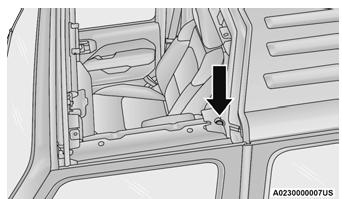
Step Three
- Remove the six Torx head screws that
secure the hard top to the vehicle (along the
interior bodyside — three screws on each
side) using the #50 Torx head driver.
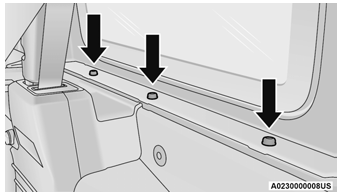
Step Four
- Open the swing gate all the way to ensure
clearance of the rear window glass. Lift the
rear window glass.
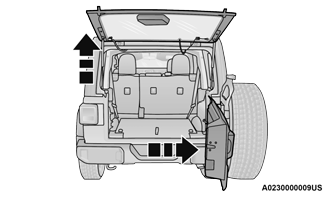
Step Five
- Locate the wire harness and washer hose
on the left rear inside corner of the vehicle.
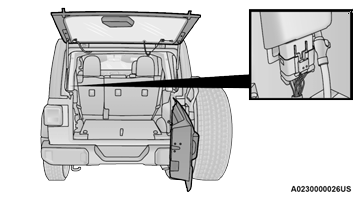
Step Six
- Release the locking tab by pushing it
downward.
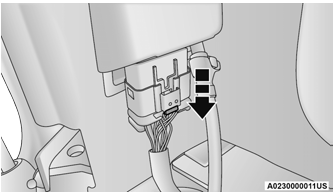
Step Seven
- To remove the wiring harness, push the tab
inward while pulling downward to
disconnect.
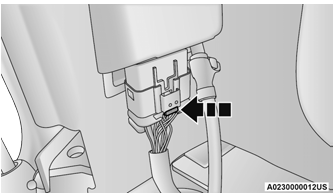
Step Eight
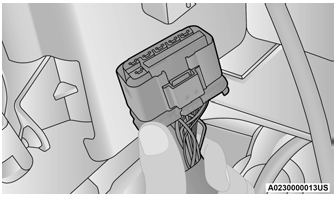
Step Eight
- To remove the washer hose, push the
release button on hose connector, and pull
downward.
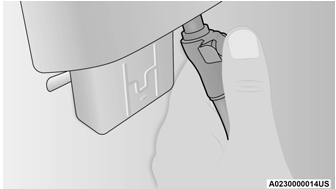
Step Nine
- Secure the wire harness to the body side by
plugging it into the receptacle and
reengaging the locking tab.
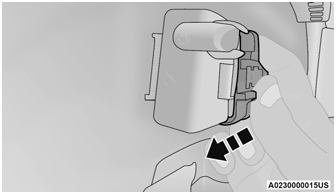
Step Ten
- Secure the washer hose by snapping it into
the top of the body side receptacle.
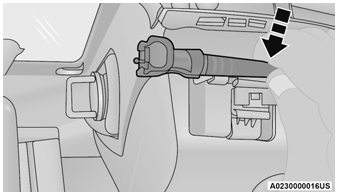
Step Eleven
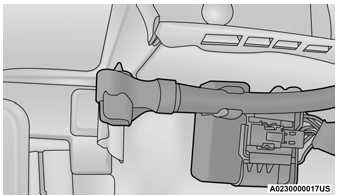
Step Eleven
- Lower the rear window, and close the swing gate.
- Remove the hard top from the vehicle. Place the hard top on a soft surface to prevent damage.
CAUTION!
The removal of the rear Hard Top requires four adults, one located on each corner. Failure to follow this caution could damage the Freedom Top.
 Hard Top Front Panel(s) Installation
Open the header latch inside the vehicle,
and the three L-shaped locks on each
panel.
Set the right side panel on the windshield
frame with the locating pin in the front
receiver mounting hole followed by the left
side panel, making sure there is no
overhang...
 Installing The Hard Top
If the door frames are installed from soft top
usage, they must be removed prior to
installation of the hard top. For removal
procedures.
To install the hard top, place the hard top on the
vehicle while making sure that the top is sitting
flush with the body at the sides and check to
ensure that there is a uniform gap between the
lift glass and hard top...
Other information:
Jeep Wrangler 2018-2026 Owners Manual: Rear Defrost Button
Press and release the Rear Defrost button on the touchscreen, or push and release the button on the faceplate, to turn on the rear window defroster and the heated outside mirrors (if equipped). The Rear Defrost indicator illuminates when the rear window defroster is on...
Jeep Wrangler 2018-2026 Owners Manual: Tire Rotation Recommendations
The tires on the front and rear of your vehicle operate at different loads and perform different steering, handling, and braking functions. For these reasons, they wear at unequal rates. These effects can be reduced by timely rotation of tires. The benefits of rotation are especially worthwhile with aggressive tread designs such as those on On/Off Road type tires...
Categories
- Manuals Home
- Jeep Wrangler Owners Manual
- Jeep Wrangler Service Manual
- WARNING LIGHTS AND MESSAGES
- How To Use Remote Start
- Manual Seat Height Adjustment
- New on site
- Most important about car
Basic Voice Commands
The basic Voice Commands below can be given at any point while using your Uconnect system. Push the VR button on the steering wheel. After the beep, say:
“Cancel” to stop a current voice session. “Help” to hear a list of suggested Voice Commands. “Repeat” to listen to the system prompts again.
Copyright © 2026 www.jewrangler.com